Trends Shaping the Future of Food and Beverage Facilities
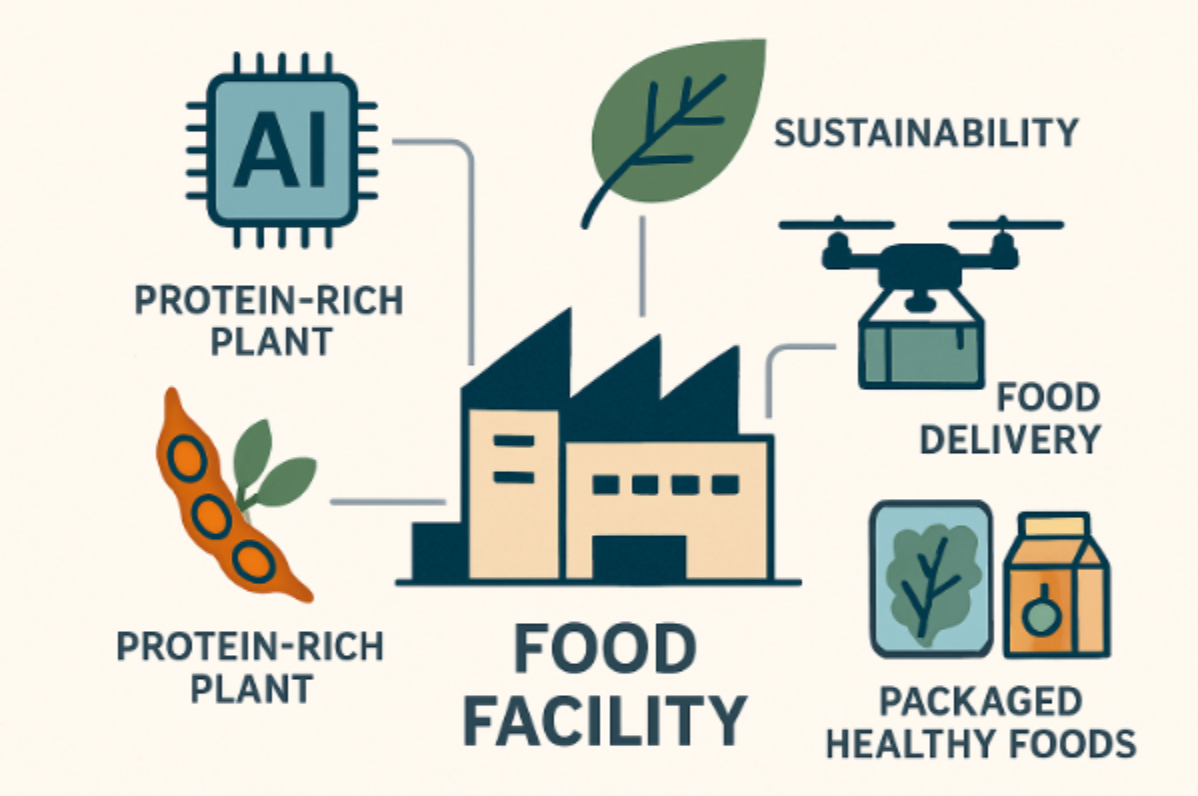
Key Takeaways:
- Artificial Intelligence (AI) is revolutionizing food and beverage operations, enhancing efficiency and personalization.
- Sustainable practices are becoming essential, with a focus on eco-friendly packaging and waste reduction.
- Consumer demand for functional foods is driving innovation in health-focused product offerings.
- Technological advancements are enabling hyper-convenience through automation and personalized experiences.
- Alternative proteins are gaining popularity, reflecting a shift towards plant-based and lab-grown options.
Table of Contents:
- AI Integration in Food and Beverage Operations
- Sustainable Practices and Eco-Friendly Packaging
- Rise of Functional Foods
- Hyper-Convenience Through Technology
- Growth of Alternative Proteins
The landscape of food and beverage facilities is evolving at an unprecedented pace. Driven by rapid technological innovations, shifting consumer expectations, and heightened environmental awareness, the industry is navigating new opportunities and challenges every year. As producers and operators search for adaptive solutions, the partnership with specialized food and beverage construction companies has become vital for turning innovative visions into reality.
In recent years, businesses across the sector have recognized the power of strategically upgrading their facilities, technologies, and processes to remain competitive. Focusing not only on what today’s consumers want, but also forecasting future trends is key. Adopting advanced digital tools, enhancing sustainability initiatives, and developing health-oriented products are all areas seeing intense activity and investment.
The competitive landscape now rewards those who can seamlessly combine operational efficiency, environmental responsibility, and individualized consumer experiences. Whether it’s through eco-conscious packaging or AI-driven customization, these trends are redefining the standards of the industry for the next decade and beyond.
The future points toward accelerated integration of new technologies, broader innovation in product lines, and an overarching mission to build resilience and adaptability at every level of food and beverage operations.
For a comprehensive overview of the market implications and projections, the latest report from Forbes Tech Council delves into how technology advancements are impacting food and beverage industries worldwide.
AI Integration in Food and Beverage Operations
Artificial Intelligence has created a transformative shift in how food and beverage businesses operate. AI can analyze vast data sets to forecast demand fluctuations, optimize inventory, and reduce spoilage. This is critical in a sector where slim margins and unpredictable supply chains have a major impact on bottom lines. Many large chains now employ AI to personalize menu boards in real-time, offering suggestions based on weather, local events, or even trending menu items. In production facilities, AI-driven robotics streamline repetitive or hazardous tasks, improving productivity and reducing labor costs.
Additionally, AI tools allow for smarter sourcing and logistics decisions, helping operators optimize transportation routes for reduced emissions and faster delivery times. As operators and industry experts at Forbes highlight, AI’s ability to rapidly adapt to real-time data has become an essential ingredient for remaining nimble in a fast-evolving market.
AI-powered quality control solutions are now increasingly utilized to detect inconsistencies or contaminants that the human eye might miss, ensuring more reliable food safety protocols and product quality. This convergence of AI and machine learning is leading to fewer recalls and improved traceability, from farm to table.
Sustainable Practices and Eco-Friendly Packaging
Environmental impact is front-of-mind for both operators and consumers. Many brands now emphasize biodegradable, compostable, or recyclable packaging to reduce plastic waste and demonstrate their commitment to sustainability. Some are also adopting circular packaging programs that allow materials to be reused or refilled, cutting down on single-use waste.
Beyond packaging, sustainability now includes aggressive targets for waste reduction—using advanced ordering systems to better estimate ingredient needs, educational efforts to minimize consumer food waste, and partnerships with organizations to divert surplus food. These approaches not only boost environmental responsibility but also win loyalty among a demographic that prioritizes ethical consumption. Sustainable practices are recognized as crucial differentiators in markets where consumers are willing to pay a premium for green choices.
Water conservation and energy efficiency are also increasingly important in facility design, inspiring more companies to invest in systems that track and reduce resource usage. Integrating renewable energy sources and adopting resource-efficient building materials are becoming industry best practices.
Rise of Functional Foods
With an increasing focus on wellness, modern consumers want foods and beverages that provide specific health benefits. Functional foods that contain added probiotics, vitamins, minerals, or adaptogens are now a prominent product category. The demand extends beyond traditional snacks and beverages, with fortification moving into numerous everyday staples like cereals, bread, and dairy alternatives.
This shift is prompting manufacturers to partner with nutritionists and researchers to create products that support immunity, brain health, and digestive wellness. As research shows, consumers increasingly expect transparency about the health benefits and sourcing of functional ingredients, leading companies to invest in clean label initiatives and education campaigns.
The increasing popularity of functional beverages such as kombucha, fortified waters, and protein-enriched drinks is also evidence that consumers are seeking both convenience and health benefits in their purchases, further encouraging product line innovation.
Hyper-Convenience Through Technology
Convenience continues to drive purchasing behaviors. Advances in technology are allowing brands to deliver fresh, tailored foods with minimal friction, whether through smartphone ordering, subscription meal kits, or automated kitchens. Features such as app-enabled curbside pickups, touchless payment systems, and AI-powered dietary recommendations are setting new standards for customer experience.
Automated food lockers and delivery drones are also emerging, addressing urban congestion and shifting consumer schedules. These technologies together are giving consumers unprecedented flexibility, with personalization and seamless service as the ultimate goals.
Digital loyalty platforms and real-time notifications are also being leveraged by brands to increase engagement, gather feedback, and personalize promotions, further strengthening the relationship between businesses and their customers.
Growth of Alternative Proteins
Alternative proteins, especially plant-based and cell-cultured products, are moving from niche options to mainstream selections across supermarkets and restaurants. Advances in food science have improved taste and texture, attracting flexitarians and traditional meat-eaters alike. Algae, fungi, and insect-based proteins are also entering the market, promoted for their ecological benefits and nutrient density.
This trend is underpinned by consumer desire for healthier diets, reduced animal agriculture, and lower carbon footprints. With regulatory landscapes evolving, more investments are flowing into research and infrastructure supporting novel food production, signaling long-term growth in this vital category.
The integration of alternative proteins into a wider range of products, such as snacks, sauces, and ready meals, is expanding consumer access and making sustainable food choices more convenient and appealing for a diverse customer base.
The food and beverage industry stands at the crossroads of tradition and innovation. Staying ahead of emerging trends, whether AI integration, sustainable operations, health-centric products, or alternative proteins, requires not only insight but the willingness to adapt continually. Facilities that embrace today’s advancements will be well-positioned to thrive in an ever-changing marketplace.