Education: Building Critical Thinking Skills in Students
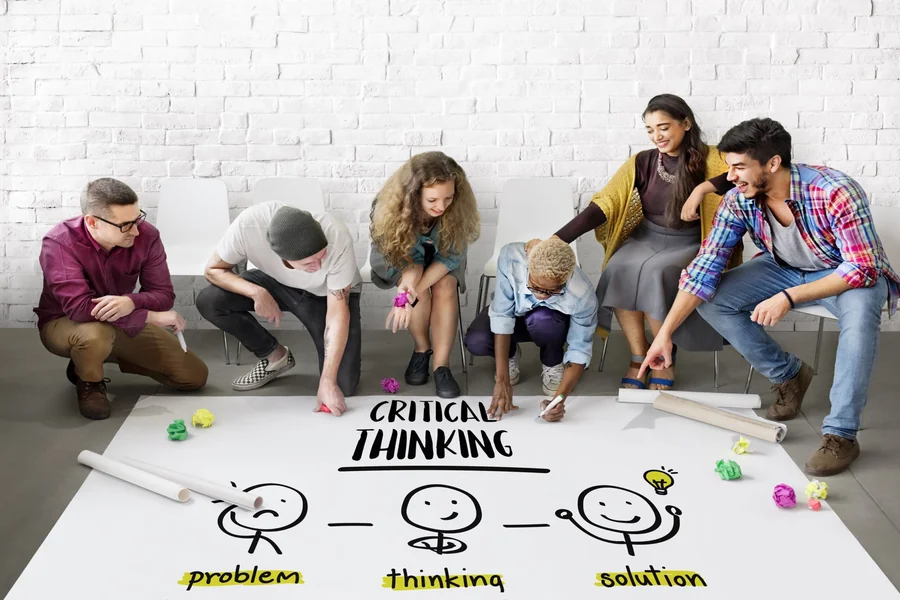
Critical thinking is a very necessary skill that aids the student in analyzing information, making an informed decision, and resolving problems. Education is particularly important to develop such abilities as questioning, reflection, and evaluation. Critical thinking prepares students in a better outlook of academic and real life scenarios. This can be achieved by teachers by developing an environment that encourages curiosity, independent thinking, and reasoning. Critical thinking also helps in developing creativity and adaptability that are essential in achieving success in the contemporary world.
Encouraging Questioning and Inquiry
Asking questions to students is one of the best solutions to developing critical thinking skills. Teachers are supposed to make classroom environment to embrace curiosity and appreciate questions. The inquiry based learning enables the students to investigate subjects and seek solutions and analyze various points of view. This strategy assists students to get out of the memorization mode to gain some insight into ideas. The use of encouraging questions also enhances interactivity and gives the students the initiative of owning their learning.
Problem-Solving and Analytical Exercises
Strengthening critical thinking can be done through problem-solving exercises. Asking questions which involve analysis, evaluation and reasoning makes students think critically. Real-life situation, puzzles and case studies would assist learners to make informed choices and use the knowledge. It can be facilitated by teachers making the students think about the alternatives and evaluate the results. Problem solving skills are acquired through practice and therefore logical thinking and ability to make decisions are instilled and students are ready to face challenges in academics as well as in personal life.
Collaborative Learning and Discussions
The participatory learning process promotes critical thinking as it motivates students to exchange ideas and argue on points of view. Team projects, group discussions, and debate expose learners to different opinions and encourage analysis. The educators are able to introduce discussions which demand evidence-based reasoning and reflection. Teamwork also develops communication and interpersonal skills as it puts students to the task of justifying their thought and thinking of alternatives. Peer learning allows the students to sharpen their minds and come up with better arguments.
Integrating Critical Thinking Across Subjects
Critical thinking is not an isolated skill that ought to be taught. Students are able to test the experiments and analyze data in science. They are able to interpret themes and character motives in literature. Students are able to evaluate causation and effects of events in history. Through the incorporation of critical thinking into regular lessons, the teacher is able to stimulate students to think and draw parallels across different fields. This integration will make critical thinking a part of learning and not an independent task.
Final Thought
Critical thinking is an important objective of contemporary education. Promotion of questioning, problem solving, teamwork, and combination of these abilities in different subjects makes the students ready to challenge anything. When teachers focus on critical thinking, they will establish environments that are active, contemplative, and self-reliant among learners. These skills are a way of equipping the students towards academic performance, personal development and work life. Critical thinking education helps students to be thoughtful, flexible and competent decision-makers.
FAQs
What is critical thinking in students?
Critical thinking is the ability to analyze information, evaluate options, and make reasoned decisions.
How can teachers encourage critical thinking?
Teachers can promote questioning, problem-solving exercises, discussions, and analysis across subjects.
Why is collaboration important for critical thinking?
Collaboration exposes students to diverse perspectives, improves communication, and strengthens reasoning skills.
Can critical thinking be taught across subjects?
Yes, integrating critical thinking in science, literature, history, and other subjects helps students apply skills broadly.
How does critical thinking benefit students in life?
It prepares students to solve problems, make informed decisions, think independently, and adapt to new challenges.